Many general practitioners and mental health practice nurses (POH-GGZ) see peer support as a valuable addition to the care offered to young people. However, it’s not always clear what @ease actually does. In this blog, we answer the five questions GPs most often ask about @ease.
News
Peer support as a bridge between young people and the general practitioner
This research shows how peer support can support young people with mental health issues and how collaboration with general practitioners and primary care can be improved.

@ease pleased with clear course on prevention and proven effectiveness
Grieving a crush can be just as painful as grieving an ex. You’re not only losing the person, but also the hope and the possible future you had imagined. Take that seriously, and try to give your feelings the space they need.
An Open Letter to the Informateur: Make sure young people always have a first place to turn to
In this open letter, @ease asks informateur Rianne Letschert to make sure first-stop help for young people is available everywhere in the country. With support from the OECD and new figures from RIVM and Trimbos, we’re asking for long-term, reliable solutions.
Bridging peer support and primary care in youth mental health: stakeholder perspectives on needs, key elements and integration challenges
This research shows how peer support can support young people with mental health issues and how collaboration with general practitioners and primary care can be improved.
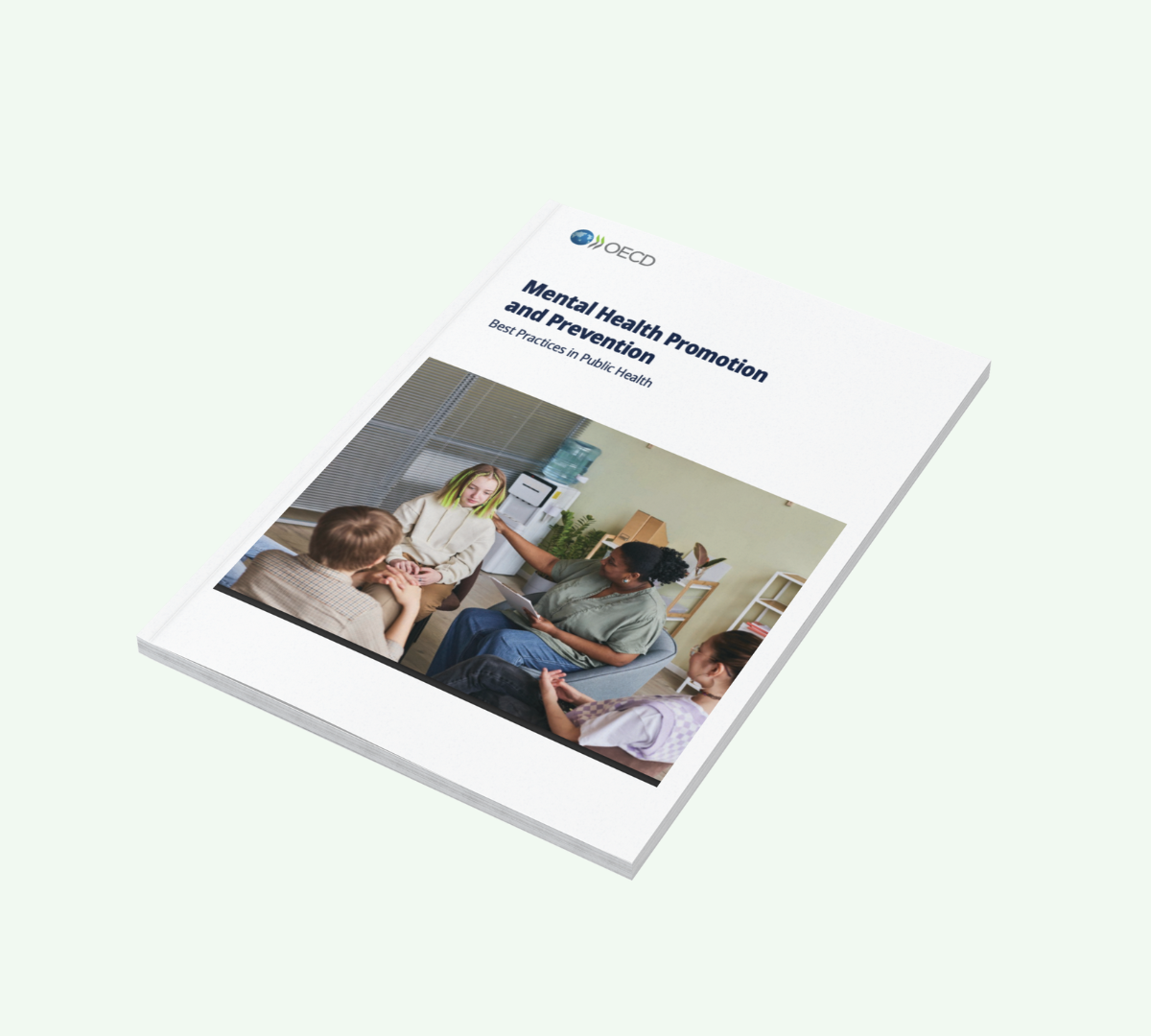
International recognition: OECD names @ease as best practice for mental health in young people
The OECD has recognized @ease as a best practice for mental resilience in young people, selected from 65 countries.

Máxima launches youth platform on mental health
Today, the new youth platform In je bol was launched – one online place where young people can find everything about mental health. @ease is proud to be one of the 7 core partners involved from the very beginning.
Guest at Mediacollege: “It is normal to not feel well every now and then”
A while ago, we were guests at the Media College Amsterdam, where we were surrounded by the creative energy of…
@ease’s outreach program reaches young people who would otherwise remain out of sight
The @ease outreach programme reaches young people who are often left out of regular care, like boys and young people with a migration background. That’s what peer-reviewed research from Maastricht University shows, carried out together with @ease and care partners in Amsterdam, Heerlen and Maastricht.
@ease Heerlen now also Sports Park Grasbroek (Heerlen North)
From May onwards, young people in Heerlen Noord can visit @ease in Sportpark Grasbroek every month.
Talking to Someone Really Helps (And Here’s What Science Says)
Talking helps. That’s scientifically proven. Research has shown that talking to someone has a positive effect on your mental health.
New: @ease Roermond
Starting Tuesday 21 May 2024, our brand-new @ease location in Roermond will open its doors wide to welcome young people.

Queen Máxima at @ease
Queen Máxima and Queen Letizia visit @ease at LAB6 in Amsterdam.

@ease Foundation receives CBF quality mark
@ease receives CBF quality mark: official recognition for reliable help for young people.
Young people want one platform for mental support
@ease collaborates with young people and six other organizations on a single online platform for mental health support.
The power of listening: @ease guest on radio program
In a radio programme about the power of listening, @ease team members share how simply listening can truly make a difference for young people.
New: @ease in Eindhoven
Starting in January 2024, @ease will also be available in Eindhoven. Young people can go to the Heuvelgalerie if they need to talk to someone.
We will start in Leeuwarden
We are busy preparing for an @ease location in Leeuwarden. We’re still looking for volunteers and professionals to join our…
Three studies on the impact of @ease on young people
To better understand how we can support young people, three scientific studies have been running since 2018 to examine the @ease approach. This protocol outlines the three studies, their goals, design, and how young people are involved.
Preparations for the new @ease location in Leiden
Our new @ease location in Leiden is almost ready to go! Right now, we’re working with our local team of…
@ease opens branch in Haarlem
As of 22 March 2023, @ease Haarlem officially opens its doors. The Haarlem location was set up in collaboration with…
Anniversary year for @ease
Back in 2018, @ease opened its very first locations in Maastricht and Amsterdam. Throughout 2023, we proudly celebrated our 5-year…
@ease opens second drop-in location for young people in Heerlen
From 7 December 2022, @ease (pronounced “at ease”) opens a second walk-in location in Heerlen, at youth centre The Break….
International Youth Mental Health Congress (IAYMH) Copenhagen
From 29 September to 1 October 2022, the 6th International Youth Mental Health Congress (IAYMH) took place in Copenhagen. Young…
@ease starts youth drop-in in Zwolle city hall
Starting 17 April 2023, young people in Zwolle can also drop by to talk – anonymously and without any pressure….
Young people participate in European exchange project on mental health
From 25 to 29 April 2022, the second round of the European youth exchange project ShareCare will take place in…
Who are the visitors of @ease?
Who are the young people who visit @ease, and what brings them here? Thanks to this study, we now have a better understanding of their backgrounds, the challenges they face, and why @ease is often their very first step towards getting help.
Urgent need for innovative mental health care
Research shows that young people around the world are at high risk of mental health problems, but often can’t access the right support. The researchers call for a radical rethinking of youth mental health care.
Working visit of Queen Máxima
On Wednesday 24 November 2021, Queen Máxima visited our @ease location in Amsterdam. Volunteers and professionals from @ease and other…
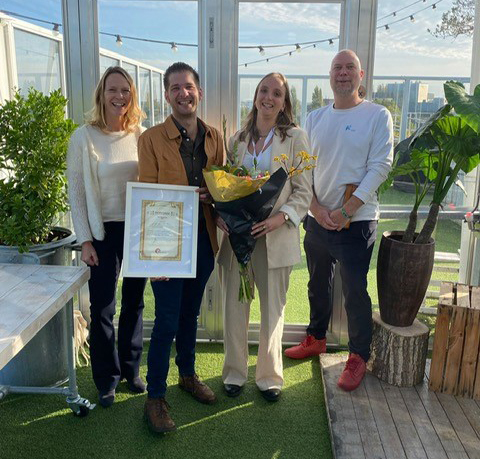
PROUD!
@ease has won the Research & Innovation Trophy 2021!During a conference by the NFU on ‘Research & Innovation for a…
What helps young people seek help and what holds them back?
In this 2021 qualitative study, young people shared their experiences seeking help for mental health issues. What helped them? And what obstacles did they encounter?

How do we improve mental health care for young people?
Why don’t young people get the support they need? That’s what Sophie Leijdesdorff studied. Her PhD shows why easy-access, informal initiatives like @ease are not just needed, they actually work. She calls for a youth-friendly approach that goes beyond age limits and diagnoses.
Impact study: social costs of lack of assistance
This 2020 impact study shows that young people who turn to @ease have a significantly lower quality of life than their peers. Their mental health issues also result in significant social costs, particularly due to truancy.